Patch clamp electrohysiology equipment
There are several pieces of core equipment that you will need to run a patch clamp rig. You will also need to understand the signal flow to be able set up a new rig or troubleshoot an old rig. You do not need the newest equipment to patch well or get good data. Companies that sell electrophysiology equipment include (in alphabetical order) Ace Glass, A-M Systems, Automate Scientific, Digitimer, CoolLED, HEKA, Luigs and Neumann, Molecular Devices, Narishige, Nation Instruments, Precisionary, Scientifica, Sensapex, Siskiyou, Sutter, Thor Labs, and TMC among others.
The rig
Microscope
You will need a microscope. Microscopes can be either fixed to a platform or on a low friction movable stage. If the microscope it fixed to a platform then your manipulators will generally be on a movable stage along with the the slice well. Microscopes come from a variety of companies.
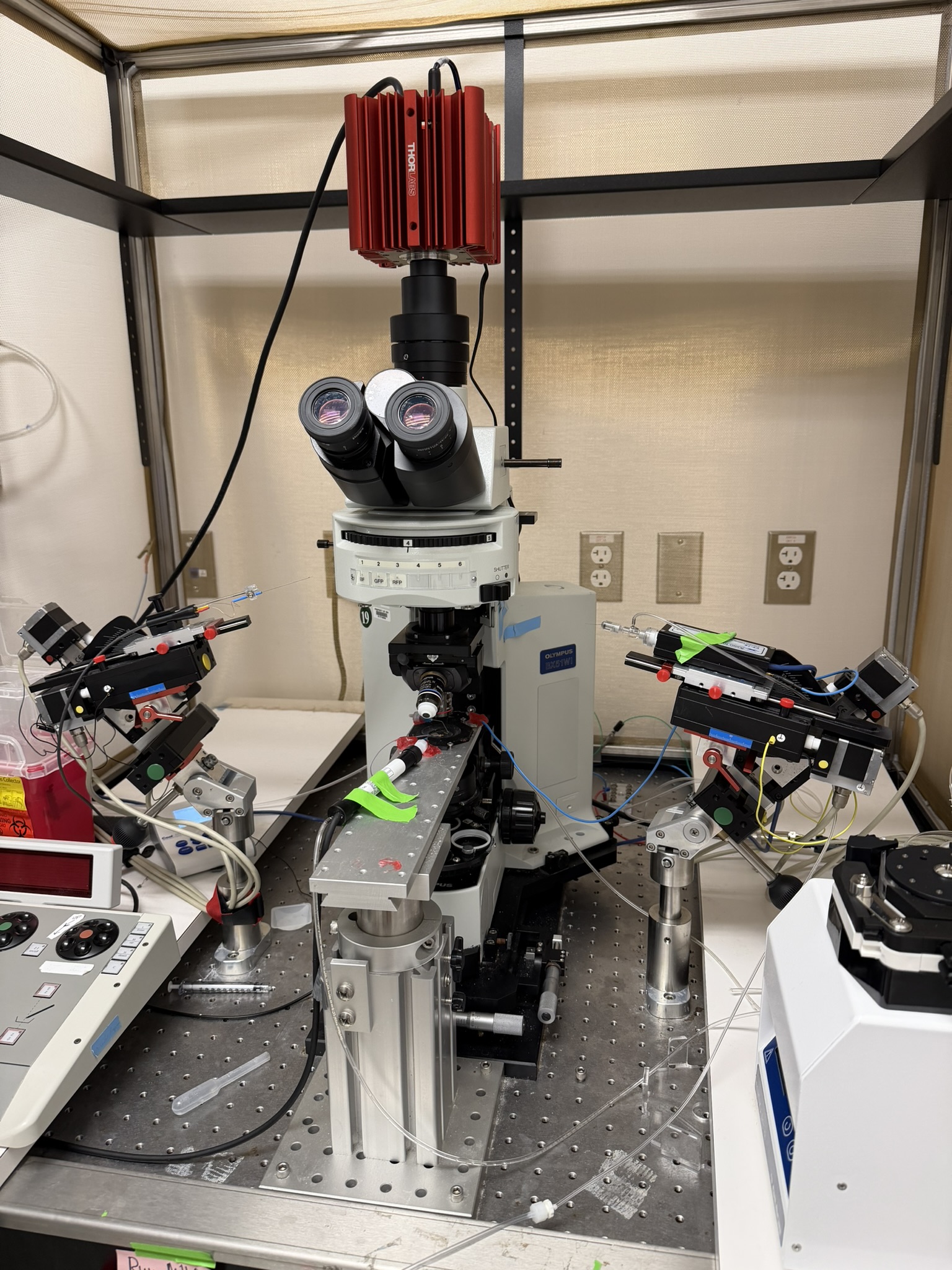
Olympus BX51WI with manual micrometers
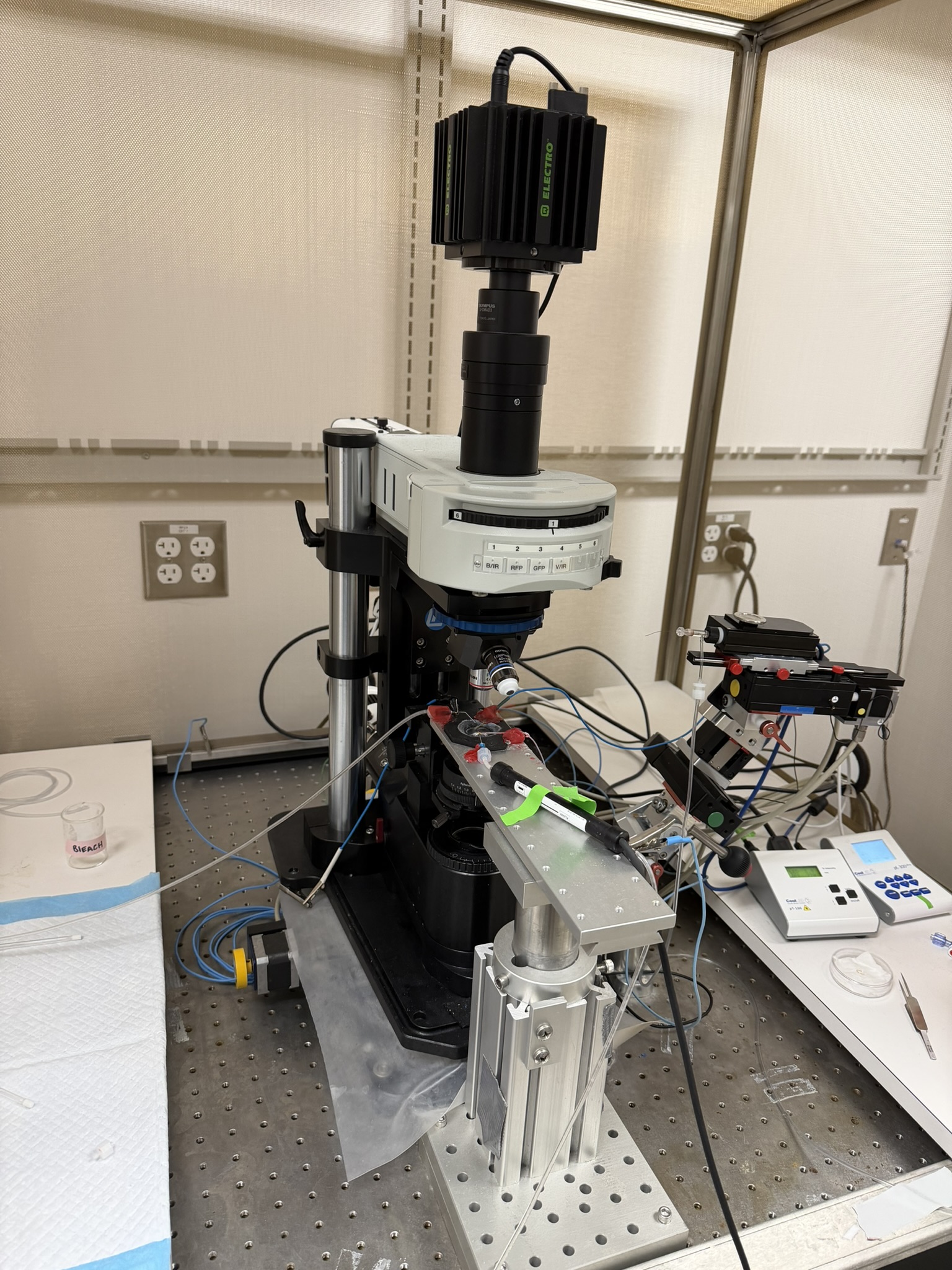
Luigs-Neumman microscope with motors
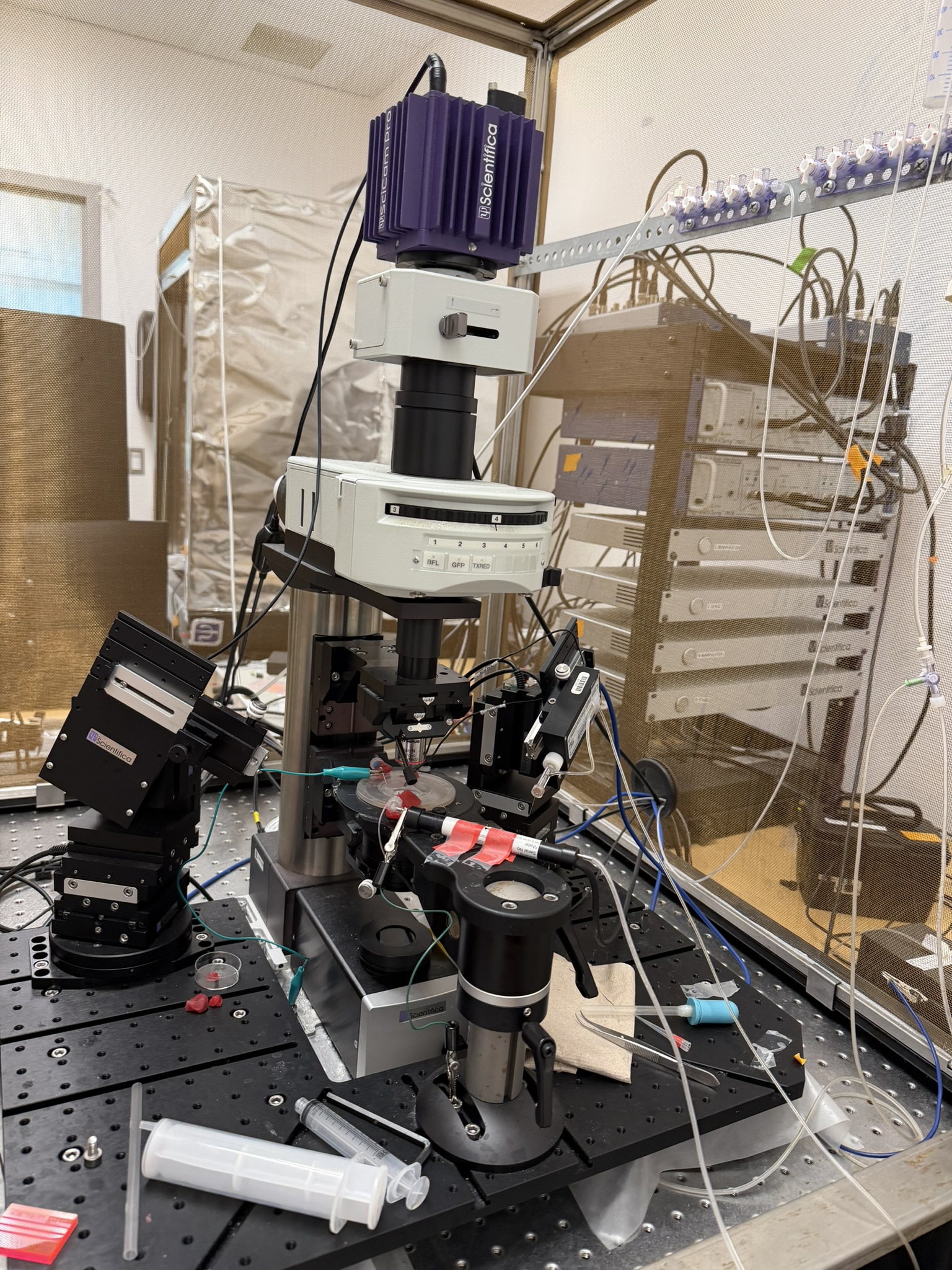
Scientifica microscope with motors
Optics
You will need a microscope with differential inference contrast, Dodt gradient contrast, or a polarized bright light system (very old school but it works). If you want to do channelrhodopsin stimulation you will need either a mercury bulb light or more modern LED system. Usually these systems will be paired with a filter cubes in the upper part of the microscope. CoolLED seems to have a monopoly on the LED systems that labs use and mercury lamps are much less common.
Camera
While cameras are not essential they are pretty much standard on most rigs, even older ones. A lot of companies sell cameras and a lot of the time they come included with the rig. Older cameras tend to be CCD but newer cameras seem to moving towards scientific CMOS sensors. If you want to take videos you will definitely want one a camera with the large aluminum body since this helps with cooling. Some cameras come with their own software like Thor labs and for others you can generally run them with MicroManager. There are some electrophysiology programs that have control the cameras directly in the software especially if the offer some sort of automated patch-clamp.
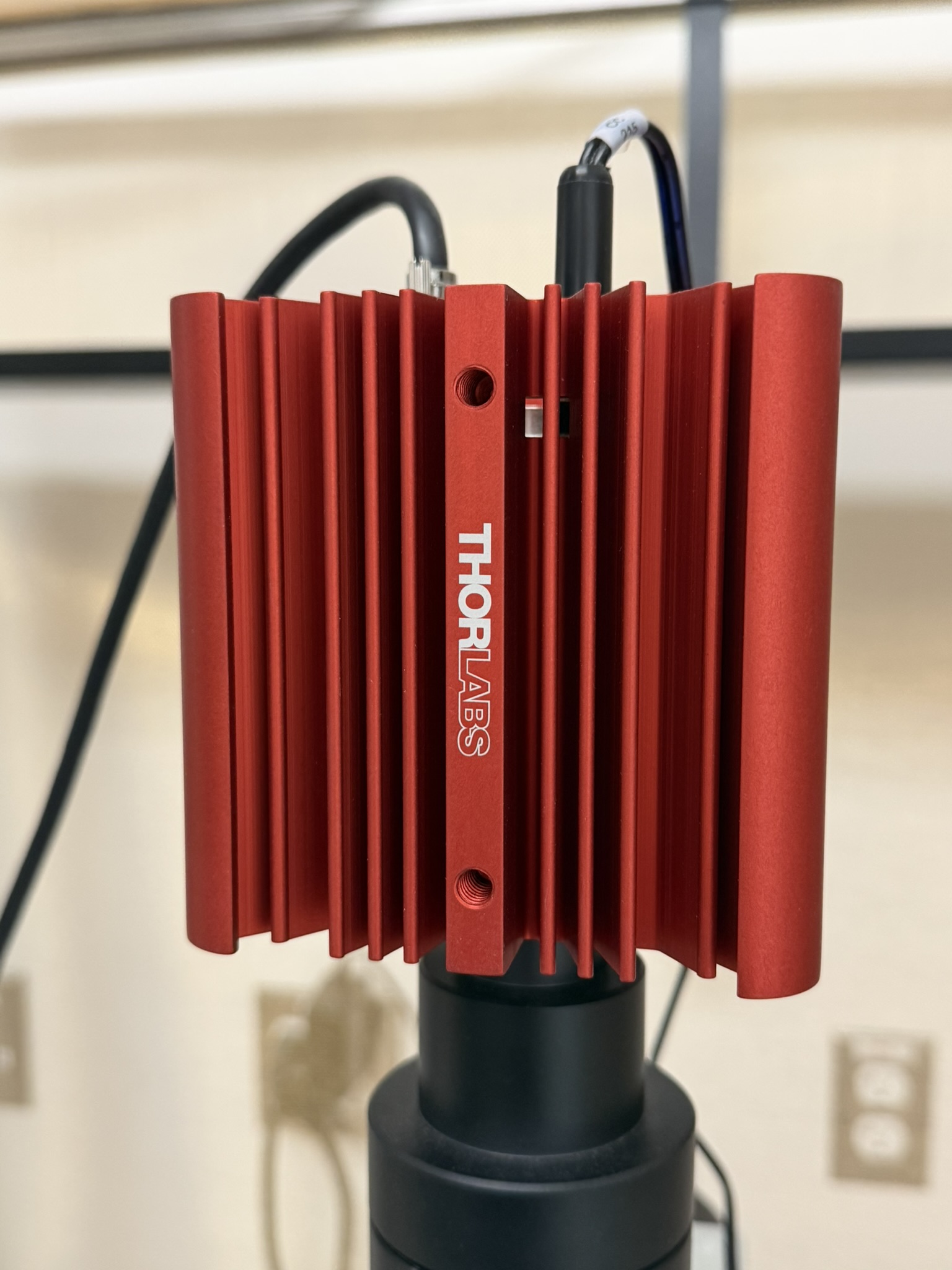
ThorLabs scientific CMOS camera.
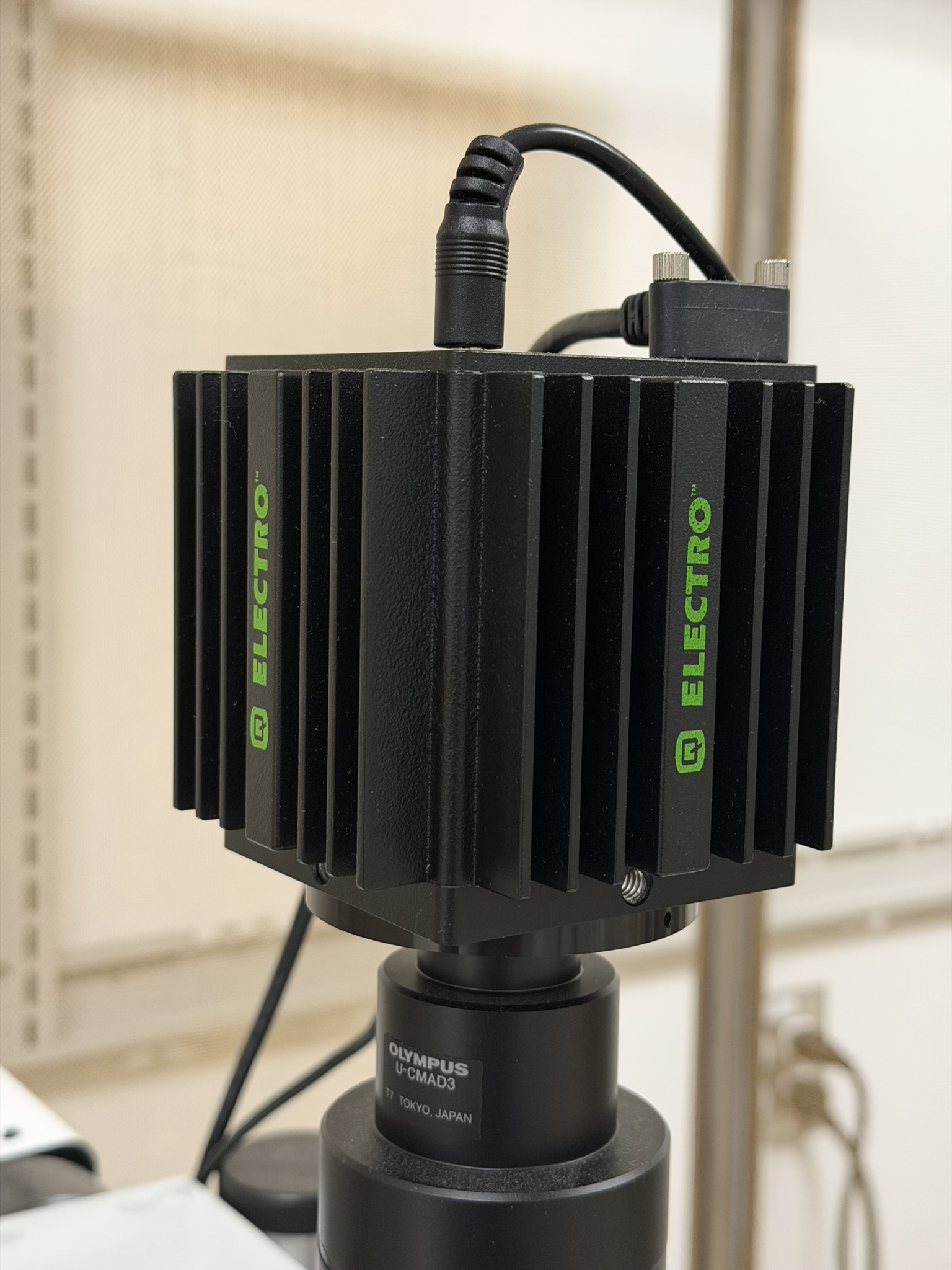
Electro CCD camera.
Manipulators
Most manipulators for patch clamp electrophysiology are motorized since they provide a lot more fine control. For using a stimulus probe you can use a manual manipulator. The biggest difference between manipulators is whether the Z-axis is angled or flat. The probe its self is always angled but the the manipulator can move at that angle or a stand flat axis. Luigs and Neumman manipulators default to angled and others like Scientifica defualt to flat.
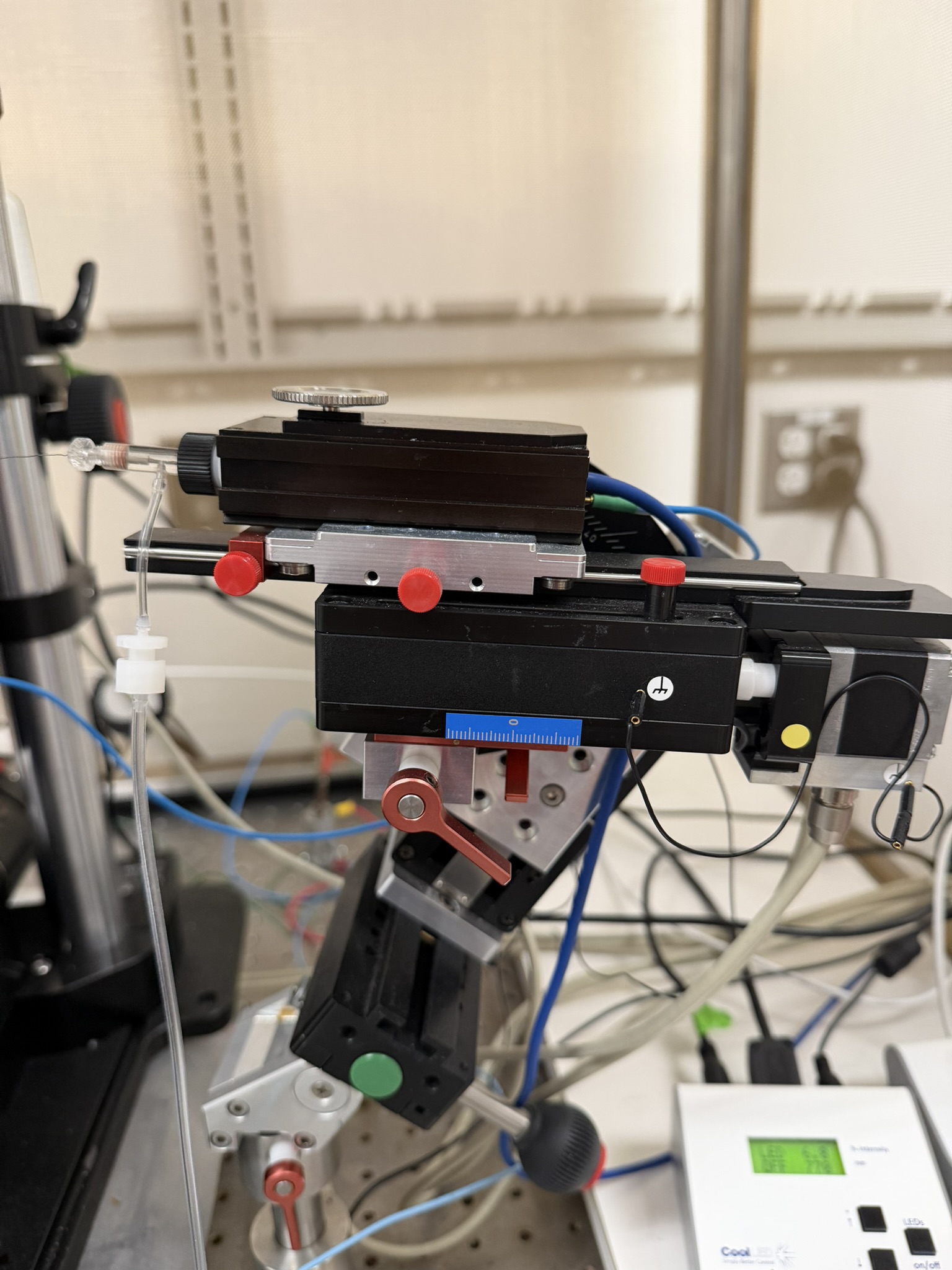
Luig and Neumann manipulator.
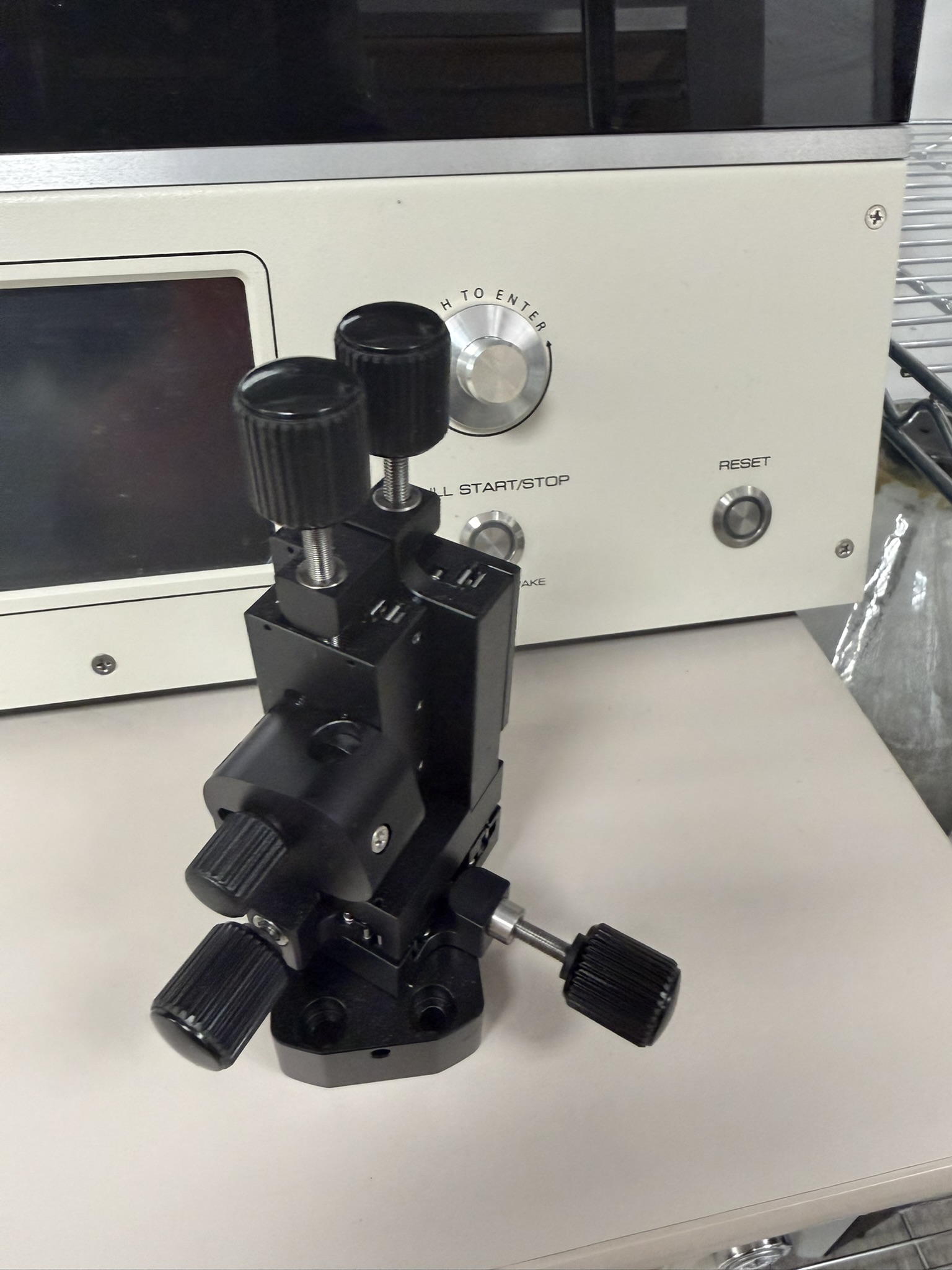
Manual manipulator.
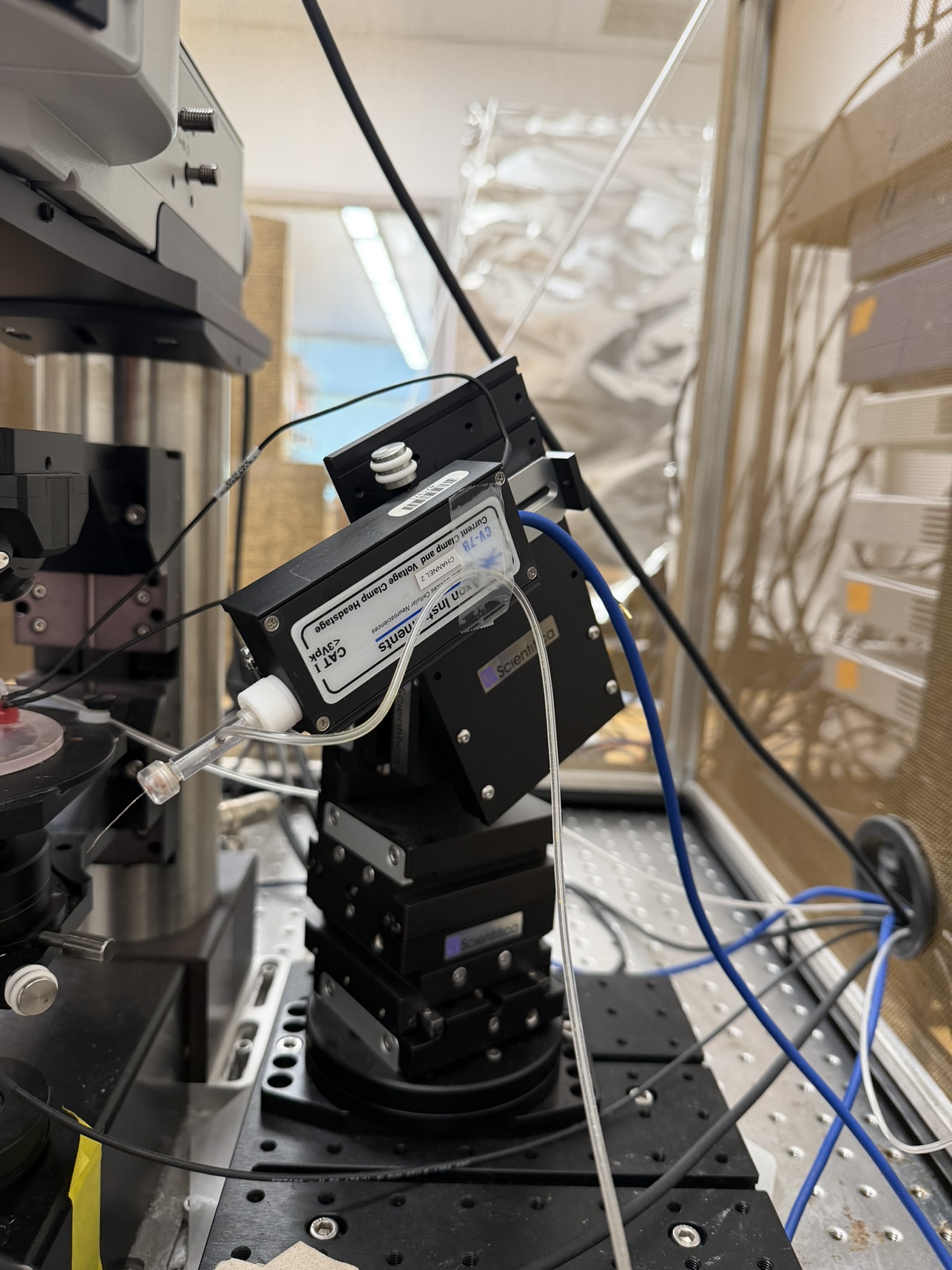
Scientifica manipulator.
Motorized manipulators come with two types of controller. Usually there is a large flat one that controls the microscope and a smaller one to control the manipulator. Motorized manipulators will have a fine and coarse control for all axes while manual manipulators may have a fine axis for only one axis.
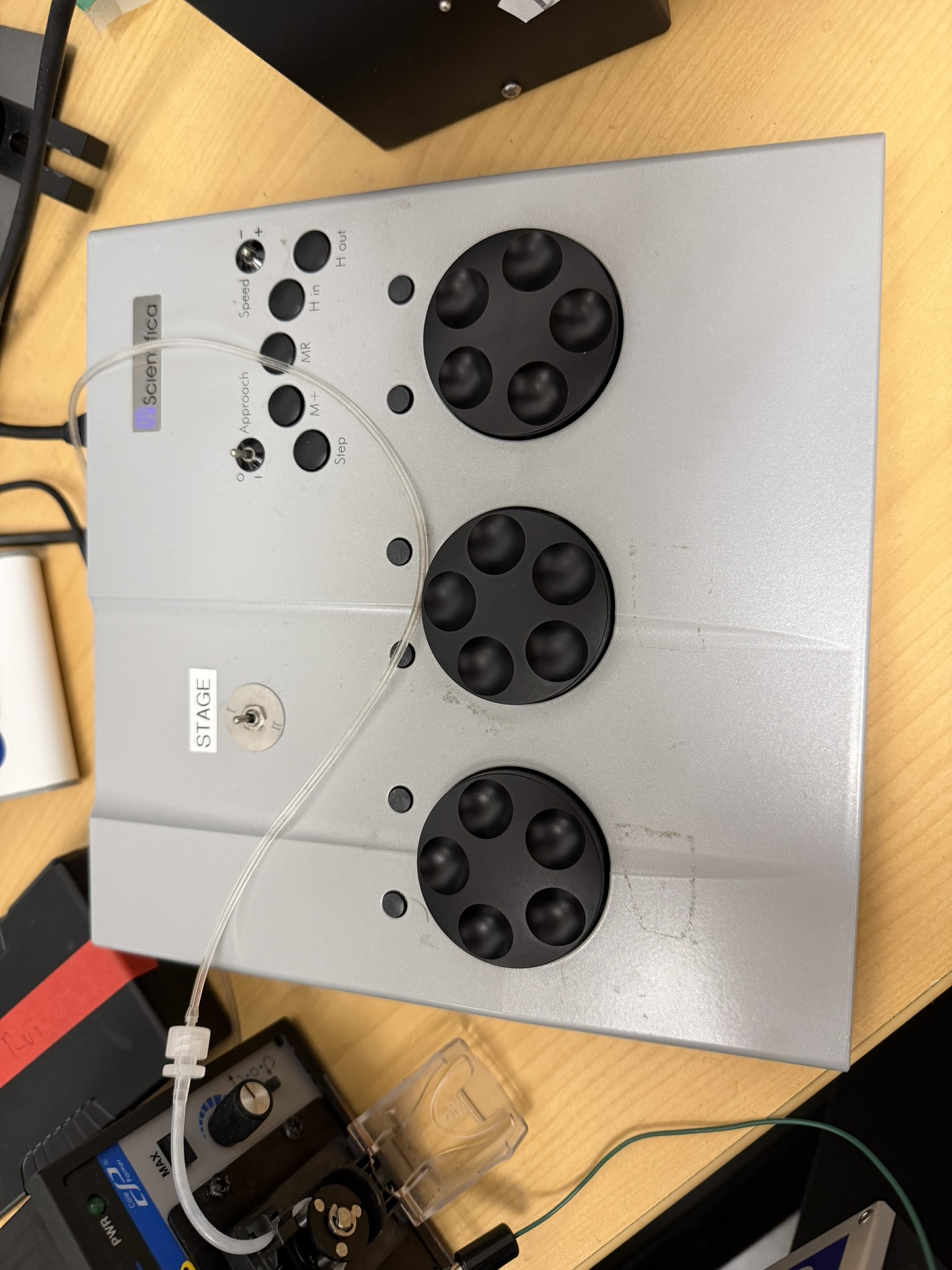
Scientifica controller.
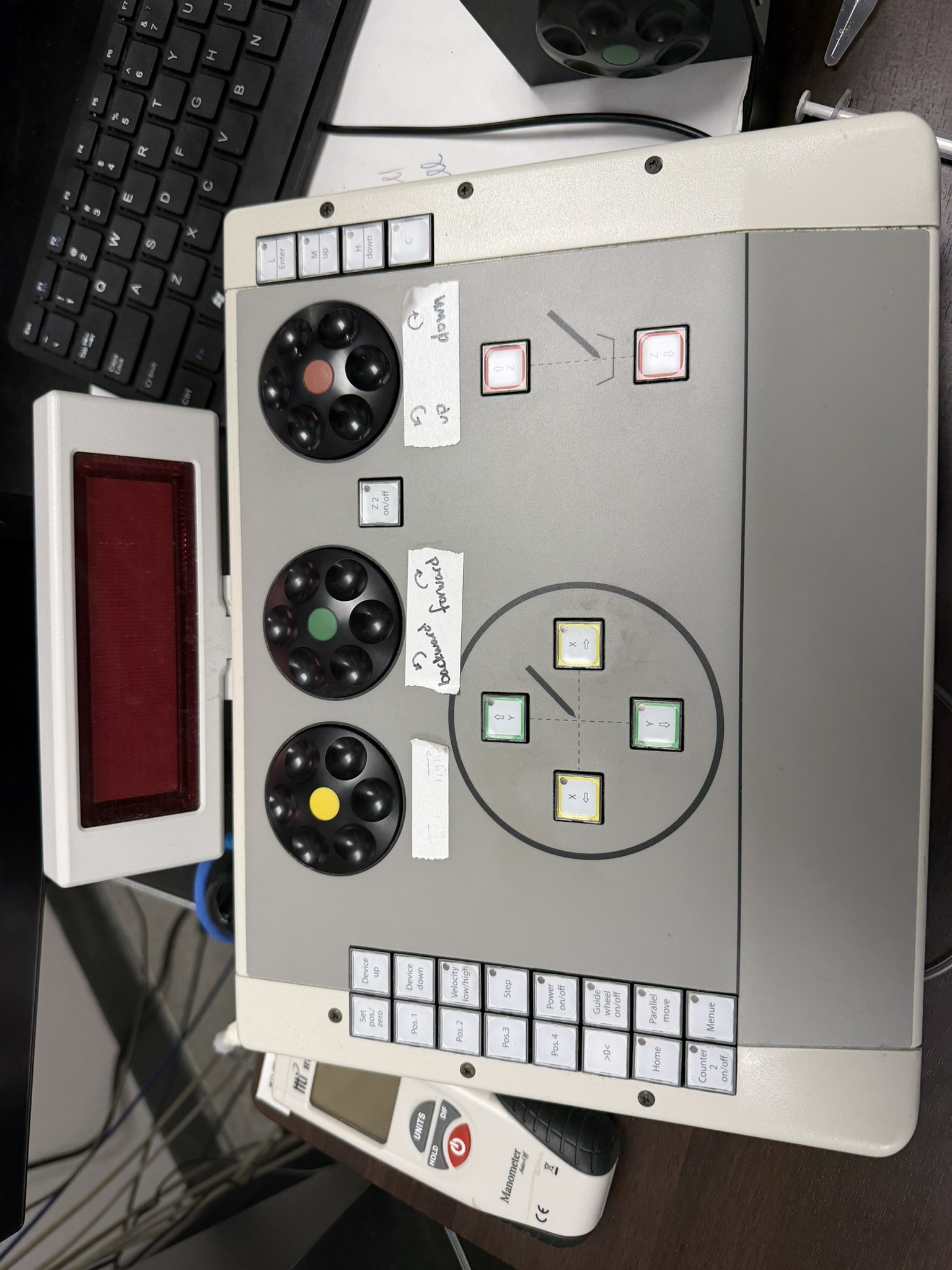
Old Luig and Neumann controller.
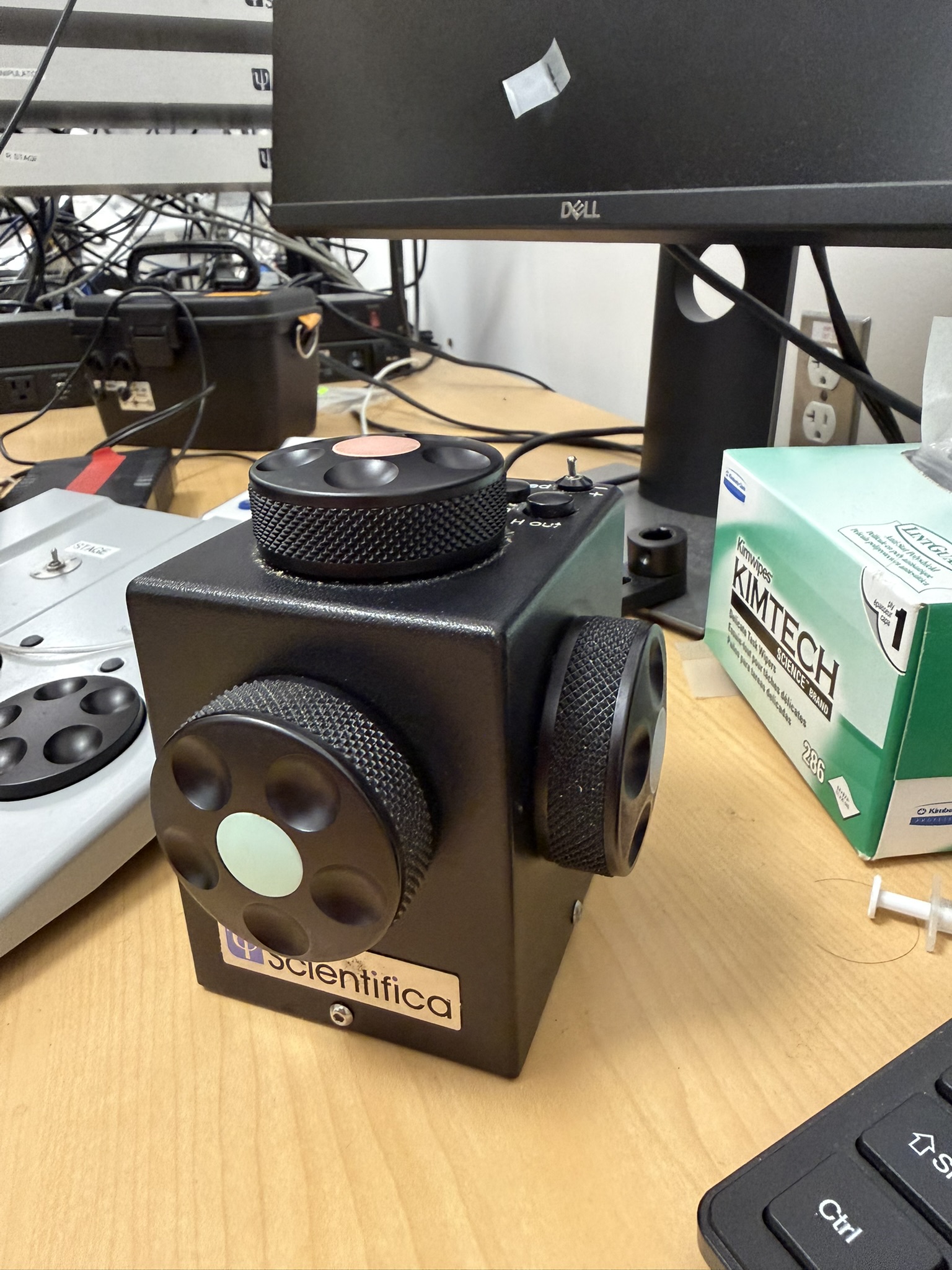
Scientifica cube.
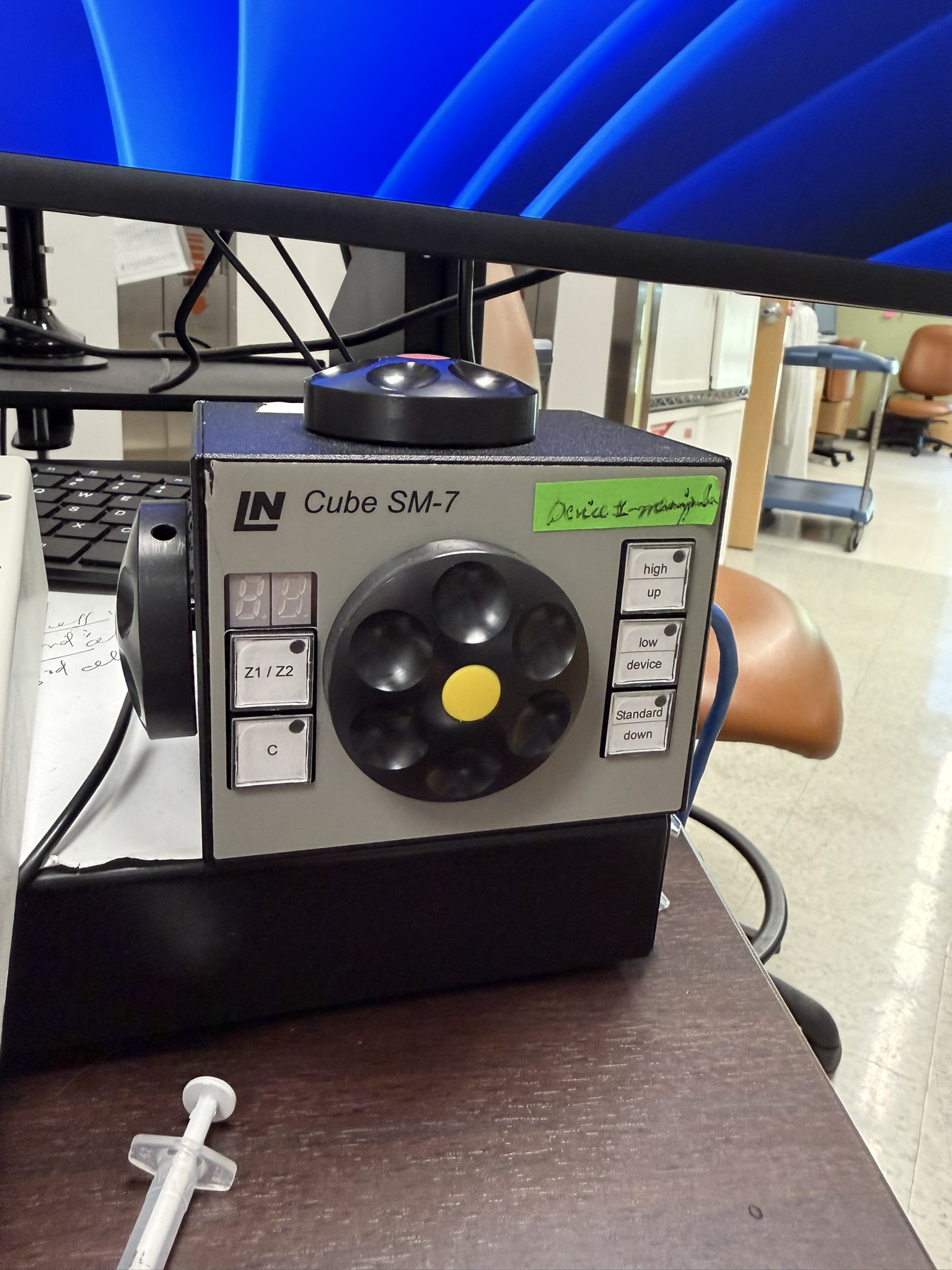
Old Luig and Neumann cube.
Amplifier
You cannot do electrophysiology experiments without an amplifier. The amplifier controls the currents going into a cell and the voltages the cells are held at. The amplifier allows us to record very tiny signals. The amplifier controls the mode of recording; voltage clamp, I=0, and current clamp. The amplifier has to connect to a headstage. The headstage is where the glass electrode goes. The headstage and amplifier are usually calibrated to work together so they usually come from the same company. Molecular Devices has a good book, [The Axon Guide] (https://
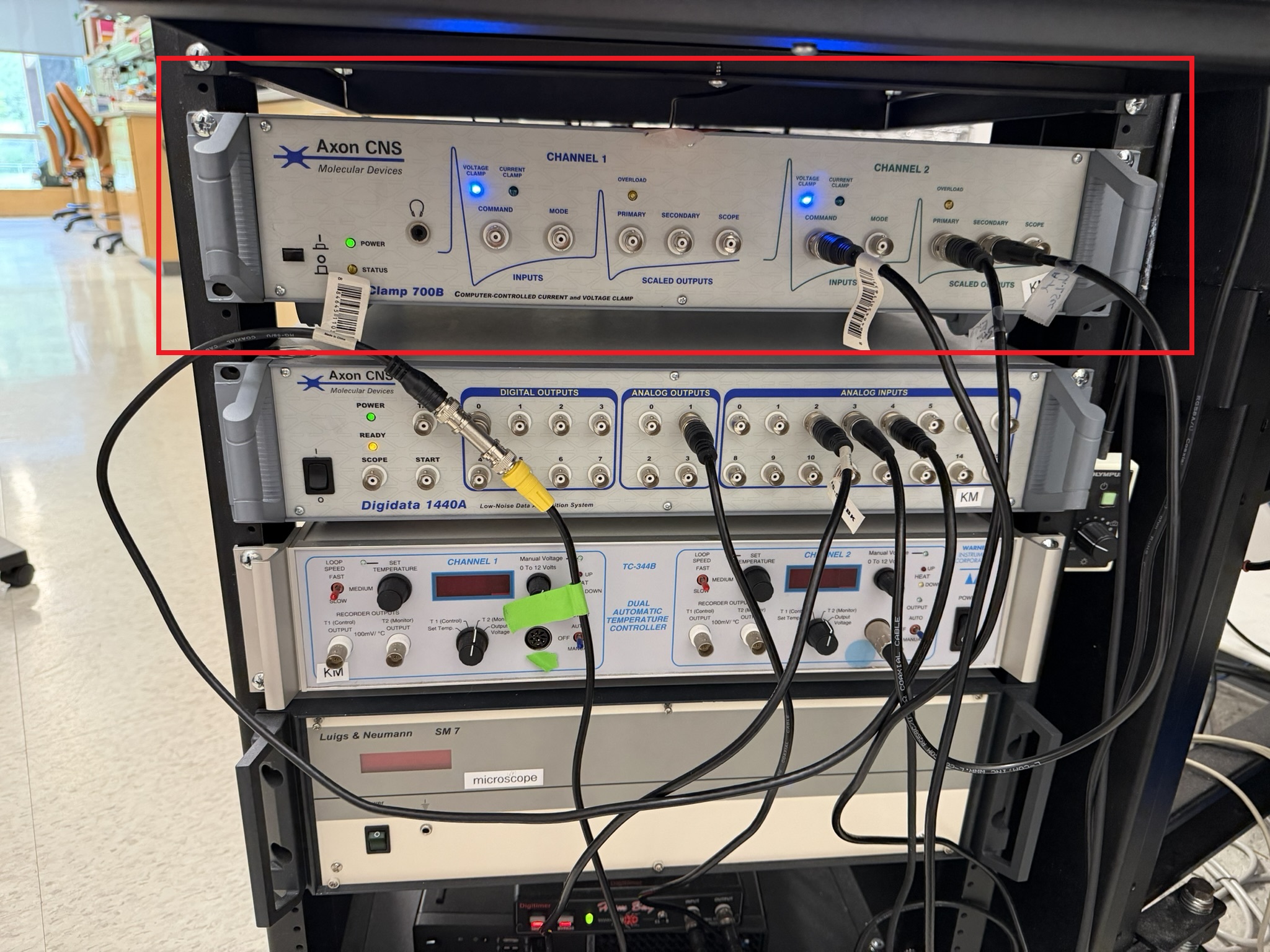
MultiClamp 700B.
Digitizer
The signals we get from the amplifier are analog and need to be digitized to be saved on the computer. Digitizers, also called DACs for short, turn our computer code into analog signals that the amplifier can “understand”. While a lot of companies that make amplifiers also make digitizers, some companies specialize in high performance digitizers like Nation Instruments.
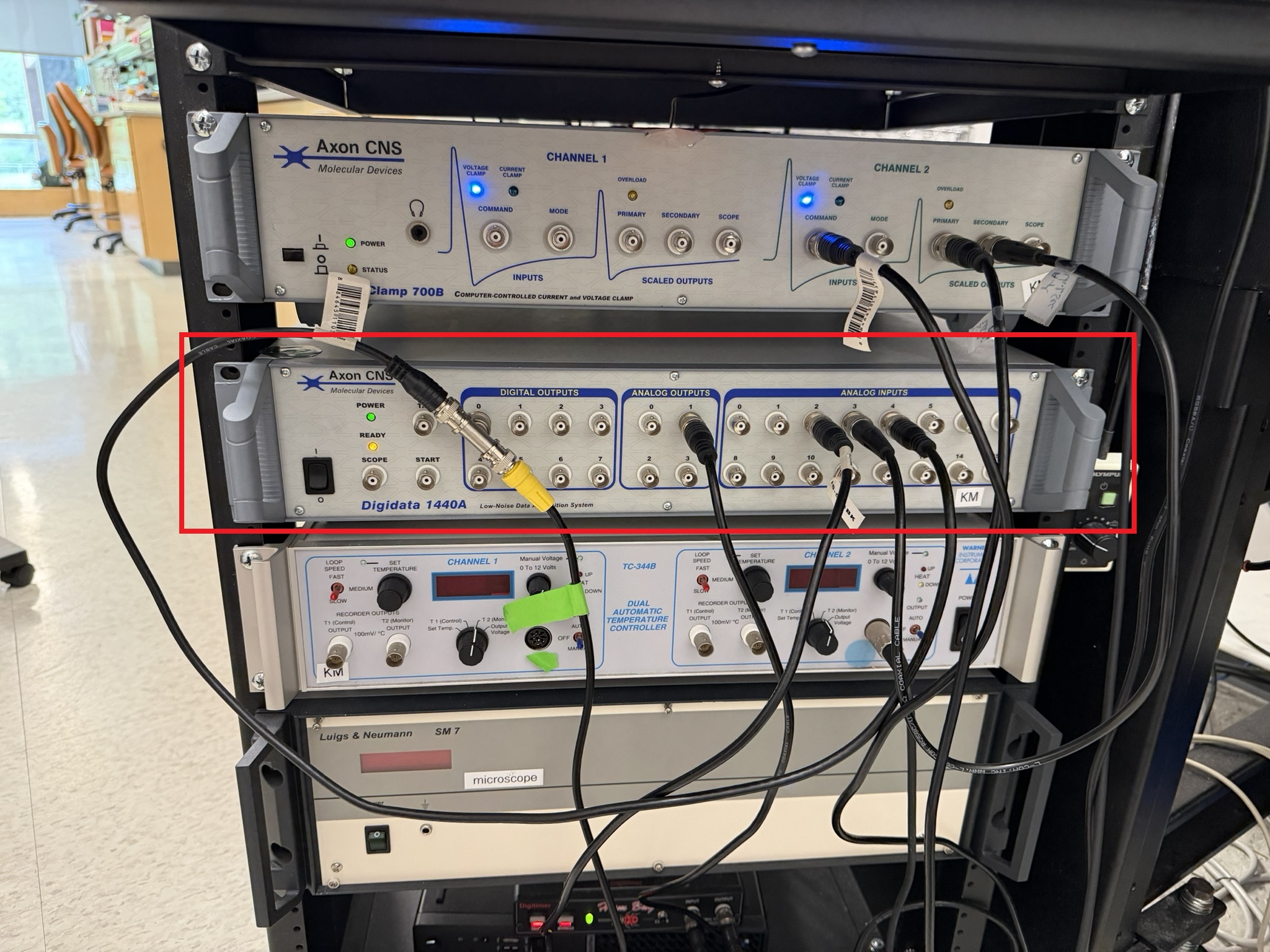
Digidata 1400.
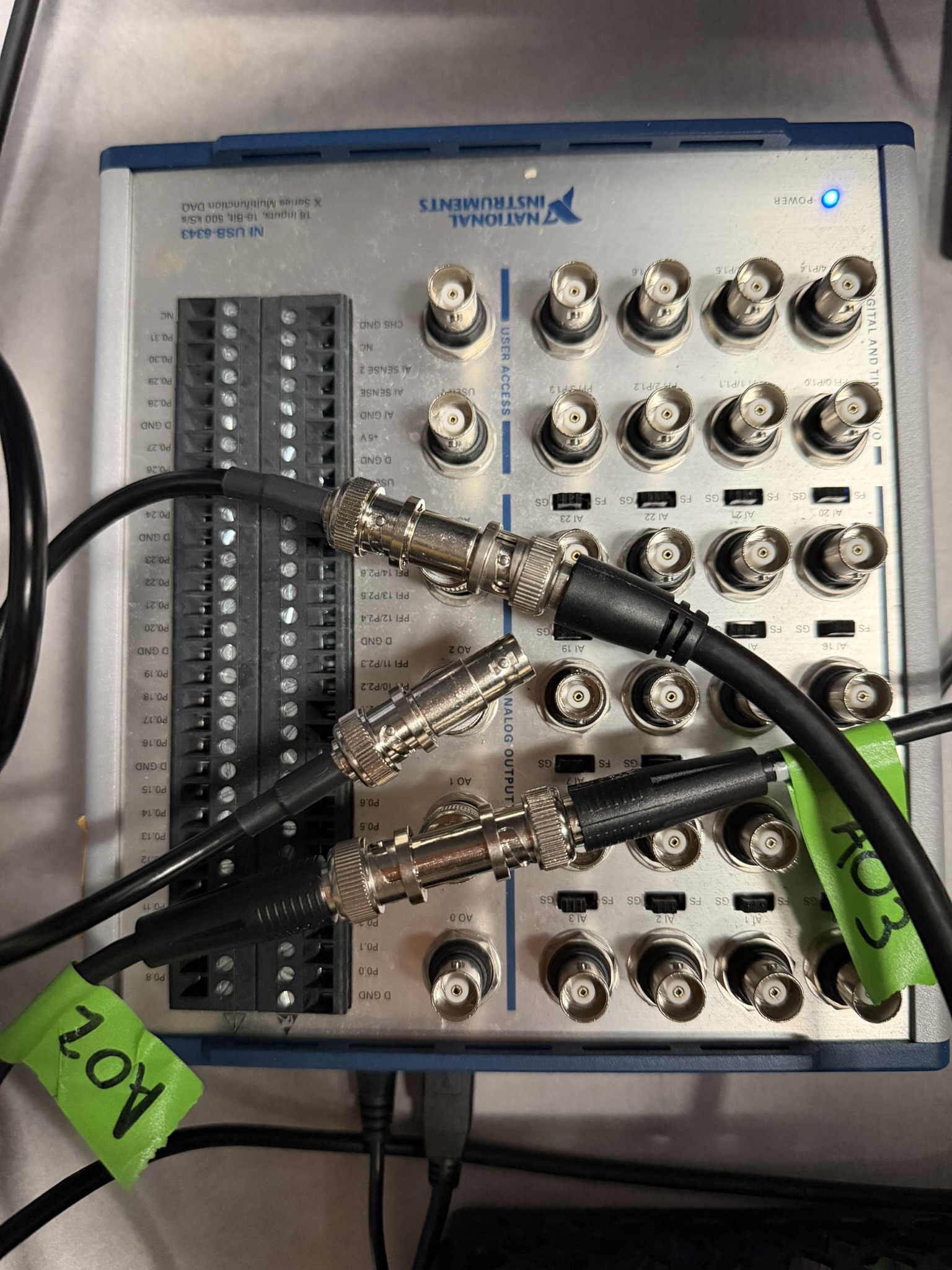
National Instruments.
Temperature controller
Most slice electrophysiology experiments should be done at physiological temperatures. To do so you use a temperature controller that either heats the ACSF going into the bath using an inline heater or heats the slice well with a heated well plate. The inline heater can be more variable but I have found them to be good enough as long as your bath flow is stable.
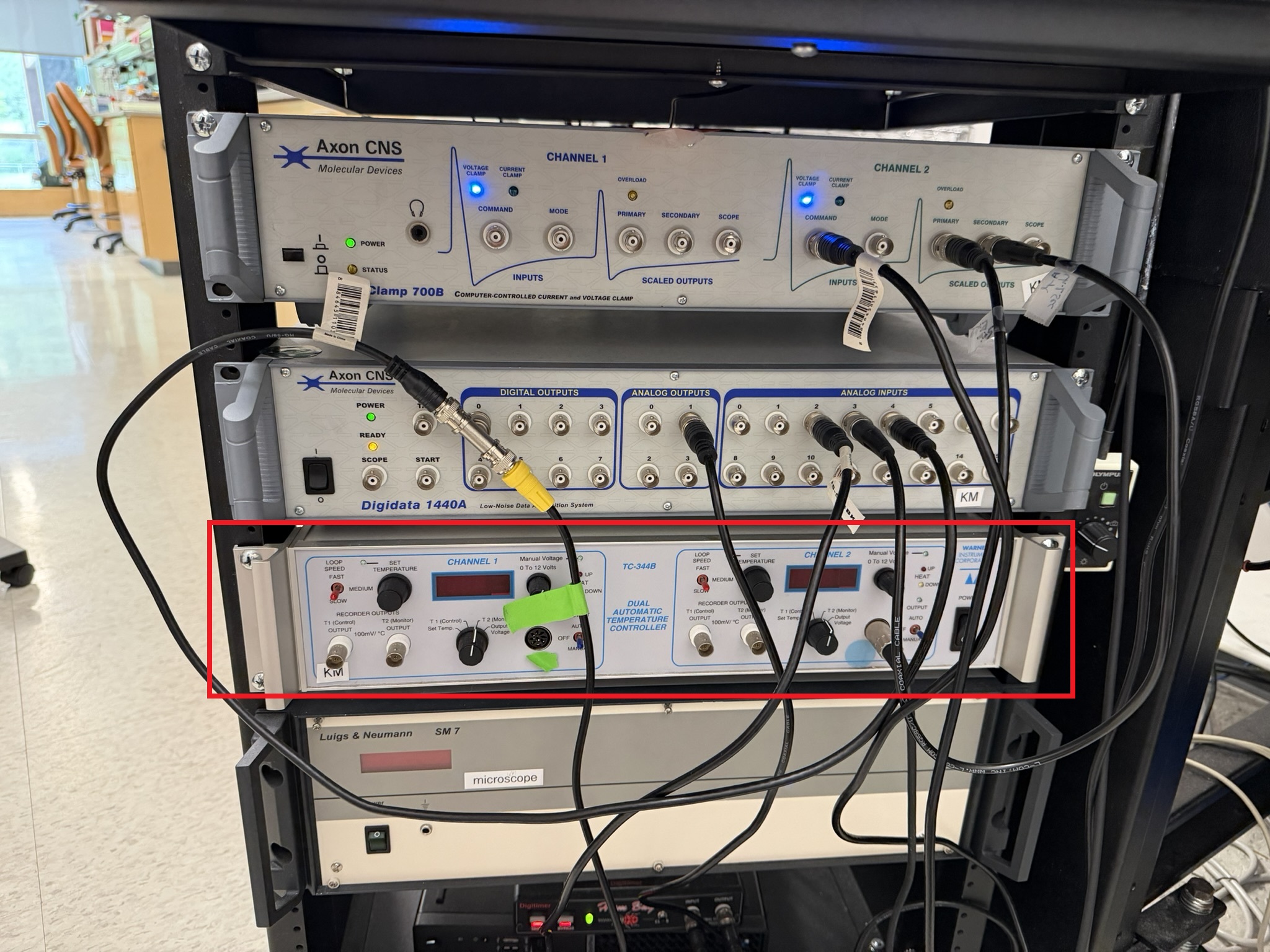
Warner temperature controller.
Controlling the flow of ACSF
There are a couple ways you can control the flow of ACSF into and out of the rig. The simplest is to use gravity to get the ACSF into the rig and a vacuum to pull the ACSF out out of the rig. You can also use a pump to get ACSF out of or into the rig. I think a lot of labs rely gravity and a vacuum since it is the cheapest and technically should add the least amount of noise to rig. Peristaltic pumps can add electrical noise to your rig however, it you either get a nice pump or run the pump of a battery you should not have any issues. Both gravity and pumps can add mechanical noise through the dripping of ACSF into the well. Just make sure your inlet is underneath the fluid in the well or you can use specialized wells that diffuse the noise (but are very prone to overflowing). The vacuum can also add mechanical noise the recording. If you want to use a peristaltic pump to get ACSF in and out of the well I suggest getting a pump that can have two simultaneous lines so you can synchronize the in and out rate.
Electrical signal flow
Now that we covered the essential electrophysiology rig components you need to understand the signal flow in the rig. The diagram below has arrows showing the direction that signal goes. The only bidirectional signals are between the computer and the DAC, and the DAC and the amplifier.
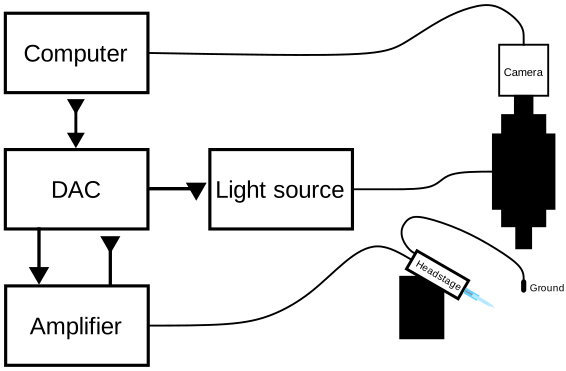
To make sure the DAC and amplifier are hooked up correctly the output of the DAC must go to the command of the amplifier. The output of the amplifier must go to the input of the DAC. You must also have a ground pellet connected to the headstage. The ground pellet and electrode comping off the headstage (usually ACSF) must both be immersed in the same dish of solution to get a signal. The ground pellet is a local reference and separate from an equipment ground. The equipment ground is mostly for safety.
Other equipment
Recording program
There are both paid and free programs to record electrophysiology data. Clampex is probably the most popular paid program that I know of. The Allen Institute uses Acq4 (Python; https://
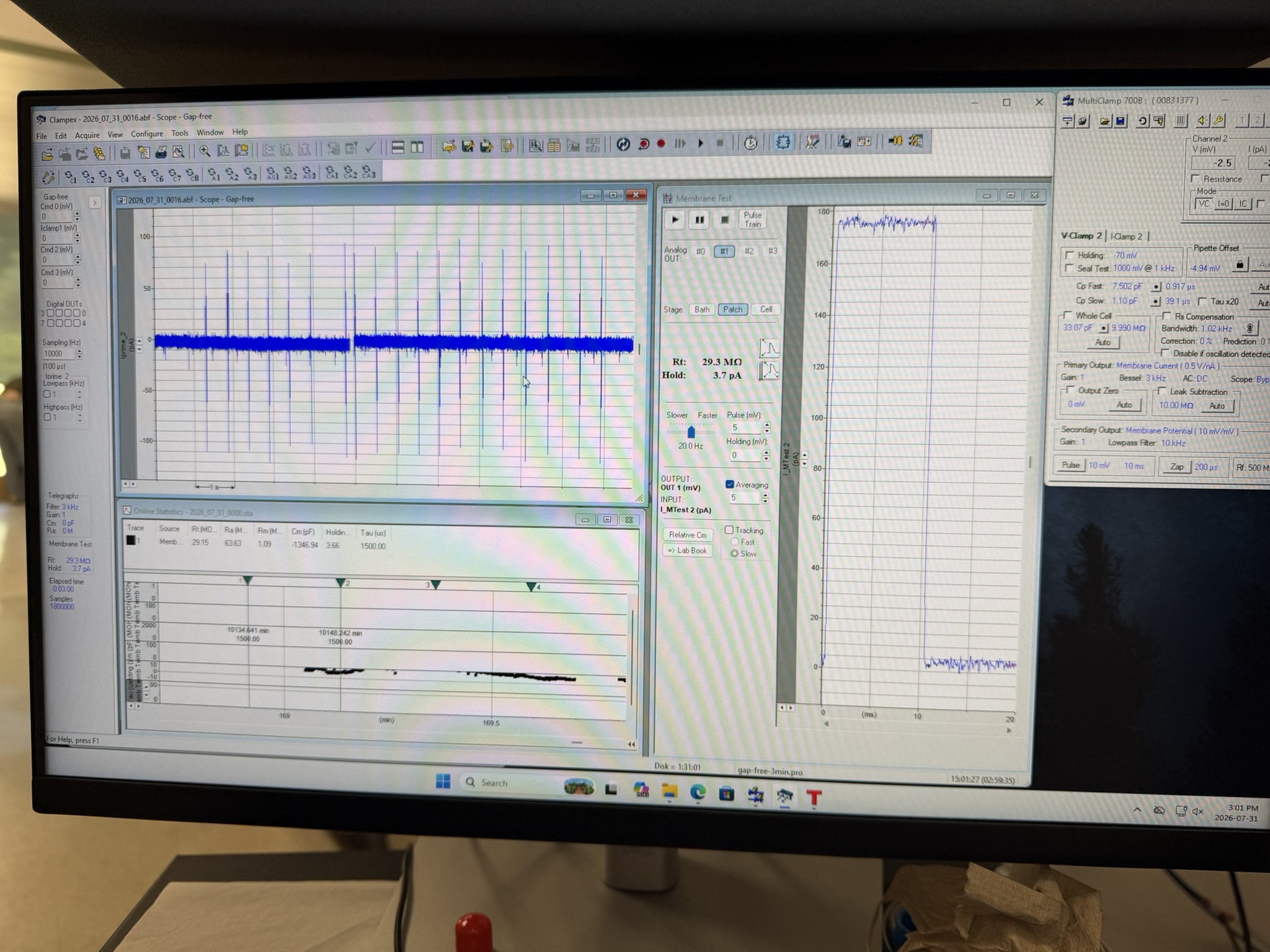
Clampex 11.
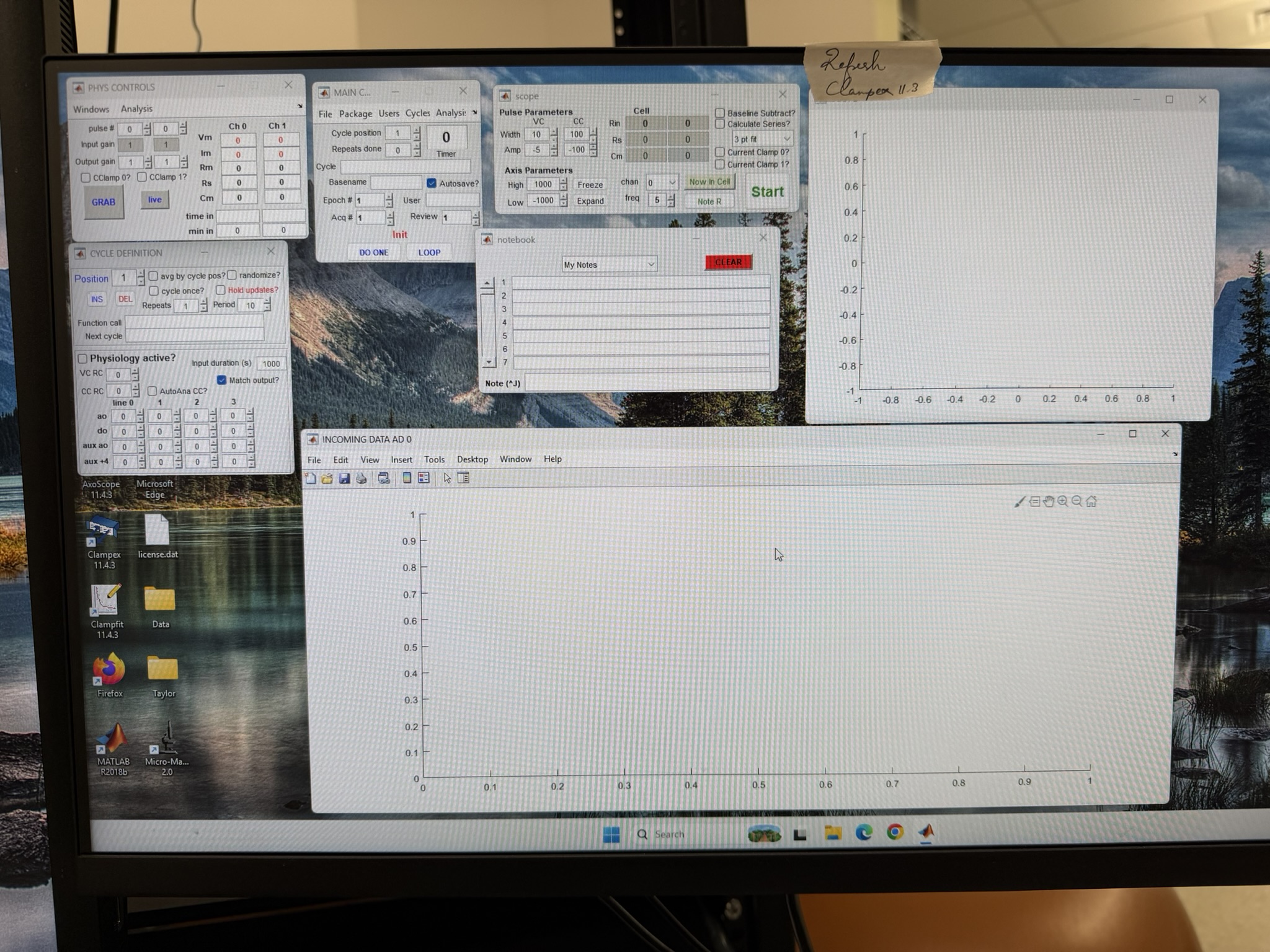
ScanImage.
Pipette puller
You will need some sort of pipette puller. I have only seen the Sutter P1000 pipette puller which relies a heated filament and solenoids to detect velocity of the separating glass. I have heard some labs still use a gravity based puller system but I have not seen one in action. Zeitz sells a puller that looks pretty interesting. Narishige also sells a pipette puller.
Cutting slices
Most labs use a vibratome to cut tissue on. I see the Leica VT1000 used the most however, any brand that lets you set the angle of the blade will work. An alternative to the vibratome is the Compresstome from Precisionary. The Compresstome is supposed to get flatter and more consistent slice but takes more time to setup since you need to embed the brain in agarose.
Slice incubation chamber
You will need something to keep you slices in before recording. You make your own or buy some.
pH meter
You will need a pH meter to test the pH of your solutions. There are many brands that will work will. I recommend getting a pH electrode that does not have an internal fill solution since they are easier to maintain.
Osmometer
Osmometer is also essential to makes sure the solutions you make have the omsolarity/osmolality that you expect. There are two types; vapor pressure and freezing point depression. The freezing point depression osmometers are supposed to be better for biological solutions. Vapor pressure do better with volatile solutions. However, both will work and the vapor pressure osmometers tend to be cheaper to run but seem to be more variable.
Microforge
A microforge is used to fire polish the tip of the pipette. Some pipette pullers clame to do this too so this equipment is not essential. The microforge also allows you to inspect the pipette tip. This can be useful for intracranial glass injection pipettes but is less needed for slice electrophysiology.
Line noise attenuator
Some times line noise is very large and can ruin your recordings. If you have tried everything to get rid of the line noise then you can use special equipment, like the HumBug, to remove the line noise. Some digitizers, like the Axon 1500B, have line noise removal built in. I would use a line noise attenuator as last resort since.
Stimulators
If you want to get the paired-pulse ratio or do LTP/LTD experiments the you will need a stimulator. They can be controlled by TTL and allow you to “inject” macrocurrents into your tissue slice. You will need a stimulus electrode that connects to the stimulator. THe electrodes can be handmade or purchased.
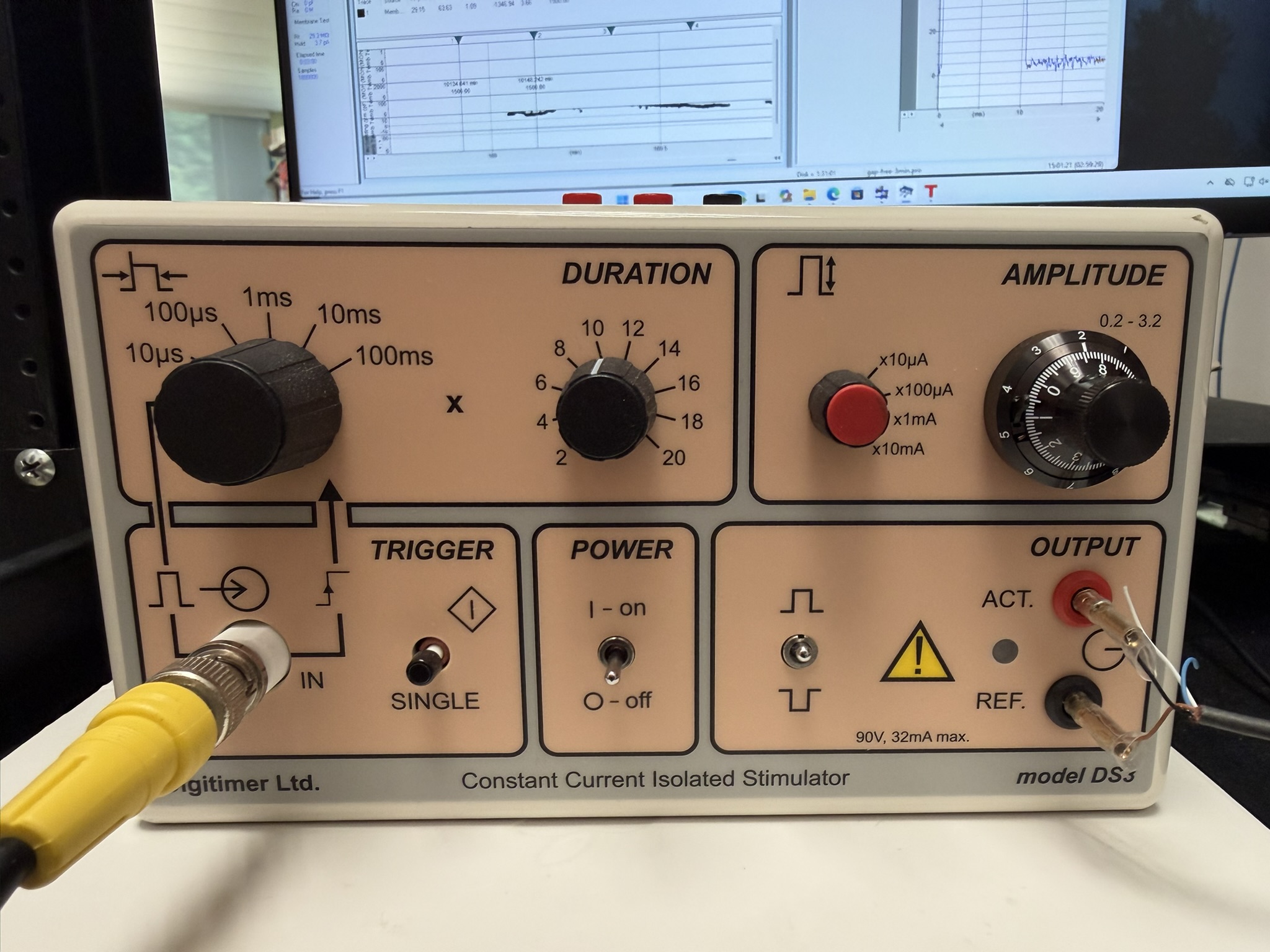
Electrical stimulus box.
Bubbling ACSF solution
There are a variety of ways you can bubble your ACSF and other solutions that need carbogen. The simplest is to just put a tube into your solution. You can also use blunt needles. I prefer the glass bubblers sold from Ace Glass. The sell a variety of porosity (size of bubbles) and lengths of glass. You can also use aquarium bubblers but they tend to be much bulkier than other bubblers.